OAPEN and DOAB 2025 Highlights
Contents
- Director’s message
- Kickstarting our strategic plans
- Key developments
- Global engagement
- Directory of Open Access Books (DOAB)
- Finances
Director’s message
The year 2025 was very eventful for OAPEN and DOAB, and it is with great pleasure that I can reflect on the year that has passed. In a highlights report such as this, it is of course impossible to capture everything that has taken place − particularly the many efforts behind the scenes that make our work possible. OAPEN and DOAB operate within a rich and interdependent ecosystem: scholars, students, publishers, libraries, funders, service providers, and policymakers all play vital roles. It is this shared commitment to open access (OA) that continues to drive us forward.
The past year has seen our collections expanding steadily, and the DOAB collection reached the significant milestone of 100,000 titles − an important step in increasing the global availability of longform OA scholarship and enabling deeper engagement with research across disciplines and borders. This is only possible because of a highly skilled team and because of the support we receive from libraries and publishers across the world, as well as a growing community of scholarly communication actors that are convinced of the importance of open infrastructures for scholarly books. A big thank you to all the libraries, institutions, publishers, and funders who have supported us in 2025! Equally important has been the strength of our community. OAPEN and DOAB have benefitted immensely from collaboration through projects, webinars, conferences, fairs, and countless meetings. By remaining open-minded, inclusive, and attentive, we have seen how collaboration emerges across our communities of practice, reinforcing our shared mission. A particularly meaningful event was the 15-year anniversary of the OAPEN Library, marked at the Frankfurt Book Fair − a reminder of how far we have come and of the collective effort behind this achievement.
2025 was also a year of significant technical transition. Following a successful and important migration of our infrastructures to CERN in January, we encountered challenges that few could have anticipated. Reckless and aggressive AI-driven bot scraping of open infrastructures like ours has become a serious threat, leading to service disruptions due to unprecedented server load. We are not alone in facing these challenges; digital library infrastructures worldwide are experiencing similar challenges. In close partnership with our colleagues at CERN (and other stakeholders in the community), we are addressing this issue, and we appreciate the patience and understanding of our partners as we work to develop resilient solutions.
Internally, 2025 brought several staff changes − an experience familiar to many organisations. We said goodbye to three colleagues, Laura Wilkinson, Dorien van der Giessen, and Ronald Snijder, whose contributions over the years have been deeply appreciated. Filling these gaps was obviously a challenge, but we were fortunate to appoint Anna Walek as our new Head of Technology, along with Wiktor Florian and Hanna Varachkina as Metadata and Systems Specialists. The technical team has quickly gained momentum and is now fully engaged in implementing the recommendations of the valuable technical review conducted by Curtin University’s Institute of Data Science. A key focus is the development of a new and efficient pipeline for importing books and metadata into the OAPEN Library, work that began in late December and that is already showing great promise.
To support our growing project engagement portfolio, requiring a strong strategic overview and management, we were fortunate to welcome Graham Stone as Head of International Projects in May (see team page).
I am proud of our achievements, which would not be possible without the dedication of our team and the many libraries, publishers and other individuals and organisations who support our mission. I am deeply grateful for their commitment and look forward to continuing our work together in service of open access and the global scholarly community.

Niels Stern, OAPEN Managing Director and DOAB Co-Director
Kickstarting our strategic plans
OAPEN’s and DOAB’s 2025–2028 strategic plans reaffirm our shared commitment to expanding and strengthening global open infrastructures for scholarly books. Both organisations operate as not-for-profit Dutch foundations guided by the Principles of Open Scholarly Infrastructure (POSI) and are united by a vision of making scholarly books openly available to all, supporting equitable access, bibliodiversity, and inclusion.
OAPEN’s strategy prioritises enhancing service delivery and stakeholder engagement, improving discoverability and user experience, maintaining high standards of academic quality, and fostering global partnerships. It also emphasises innovation and organisational resilience through professionalisation and achieving financial robustness.
DOAB’s strategy prioritises global outreach to publishers, establishing communities of practice for quality assessment, and positioning itself as a trusted source for OA book publishing for institutions and researchers. Operational sustainability, technological innovation, and strengthened interoperability with partners are further priorities to ensure long-term relevance and impact.
Collectively, these plans guide us in advancing open scholarly communication for books and broadening global participation in open book ecosystems. These Highlights demonstrate our progress towards such goals.
Key developments
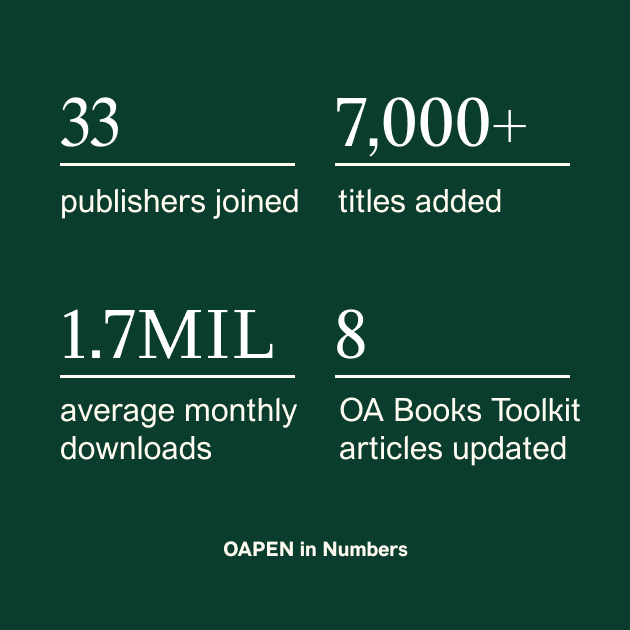
Image 1: OAPEN in Numbers.
Completion of CERN migration
The year began with the completion of our migration to CERN’s Data Centre. This involved obtaining the original software code and scheduled background tasks from our previous host to rebuild the DSpace environment with CERN. Both platforms have now been reorganised into separate, self-contained parts allowing them to run independently, making it easier to deploy, manage, and maintain them more reliably.
The migration introduced monitoring across all major services and their database connections, enabling issues to be detected quickly and ensuring everything runs smoothly. We also launched multiple copies of the system to handle higher demand and added traffic controls to prevent overload during busy periods.
We are grateful to our colleagues at CERN for their expertise and support throughout this transition and to their ongoing commitment to our partnership.
Conducting a technical review
In April, the Curtin Institute for Data Science at Curtin University in Perth, Australia, performed a technical review to assess the health of the technical infrastructure of both the OAPEN Library and DOAB. This included an independent audit review, consulting with partners through interviews, replicating of our code base, and reviewing our documentation. It also provided a set of recommendations including: upgrading our legacy DSpace and Solr systems, automating manual processes in the deposit service, improving the security of credentials and user access, enhancing the statistics dashboard, and enriching our metadata to improve discoverability and interoperability. We began implementing some of these recommendations towards the end of 2025 and will continue to work on further improvements throughout 2026.
AI, harvesting, and the integrity of open scholarly infrastructure
The completion of the migration and the outcomes of the technical review have strengthened the resilience of our infrastructure and clarified priorities for further development. With new technical staff in place and stronger partnerships supporting our work, we are better equipped to address emerging challenges in the digital research landscape.
One of the most pressing of these is the rapid growth of automated traffic driven by AI tools and large-scale data harvesting, which also raises important questions about the ethical use of AI. Issues of fairness, diversity, governance, and respect for licences and attribution are central to how new technologies should interact with open scholarly content. While AI presents risks, it also offers opportunities, and we remain committed to exploring its potential responsibly and ethically.
In November, we participated in a Charleston Conference panel with a pertinent question in its title: “Bot war: Will evil AI-scraping bots succeed in destroying our open digital libraries?” The answer to this should be rooted in both realism and optimism. While the challenges are serious, AI also holds the promise of enabling even broader and more meaningful engagement with quality-controlled OA resources, such as OAPEN’s peer-reviewed book collection of over 40,000 titles. In an era marked by disinformation and fragile public knowledge infrastructures, the role of trusted scholarly content has never been more critical. The sound and respectful conversation that is foundational to a healthy democracy is being challenged by swarms of undocumented and post-truth claims. At OAPEN and DOAB, we want to counter these serious challenges through partnerships, responsible innovation, and the ethical use of new technologies.
Improving the OAPEN Library’s metadata distribution
In June, we updated the OAPEN Library’s metadata feeds to improve their distribution and the overall service we provide to our users, in consultation with some of our stakeholders. The updated feeds contain the same information as before, but now with enhanced data.
These changes allowed exports of the description of the whole OAPEN Library collection or selected subsets, as well as feeds containing only book descriptions (without chapter-level descriptions) to ensure easier integration into catalogues. More specifically, our ONIX feed was optimised to better align with specifications from EDItEUR and our MARC feed now contains the OCLC Control Number (if available), enabling libraries to connect OAPEN metadata to corresponding WorldCat records.
Since our move to the DSpace platform in 2020, metadata exports were hard coded and remained the same. Available in six formats, including ONIX, MARC, KBART, JSON, CSV, and RIS, metadata for the OAPEN Library has been and will always be freely available to access, download, and use from our website.
OAPEN’s new visual identity
Since OAPEN began as a project in 2008, our logo and visual identity remained unchanged. We decided it was time for a change. This coincided with the 15th anniversary of the OAPEN Library, making it the perfect opportunity to celebrate with a new look. We worked with a talented UI designer and developer who helped us shape the direction of the rebrand. Our updated identity captures the values at the heart of OAPEN: openness, collaboration, and longevity. This rebrand is more than just a refreshed website or new logo; it’s a renewed commitment to supporting authors, publishers, libraries, and readers worldwide and to communicating our ongoing commitment to bibliodiversity, multilingualism, and democratic global access to knowledge.
 |  |
|---|
Images 2 and 3: The new OAPEN logos in both light and dark version, displayed here with exclusion space.
Global engagement
Engagement at a glance
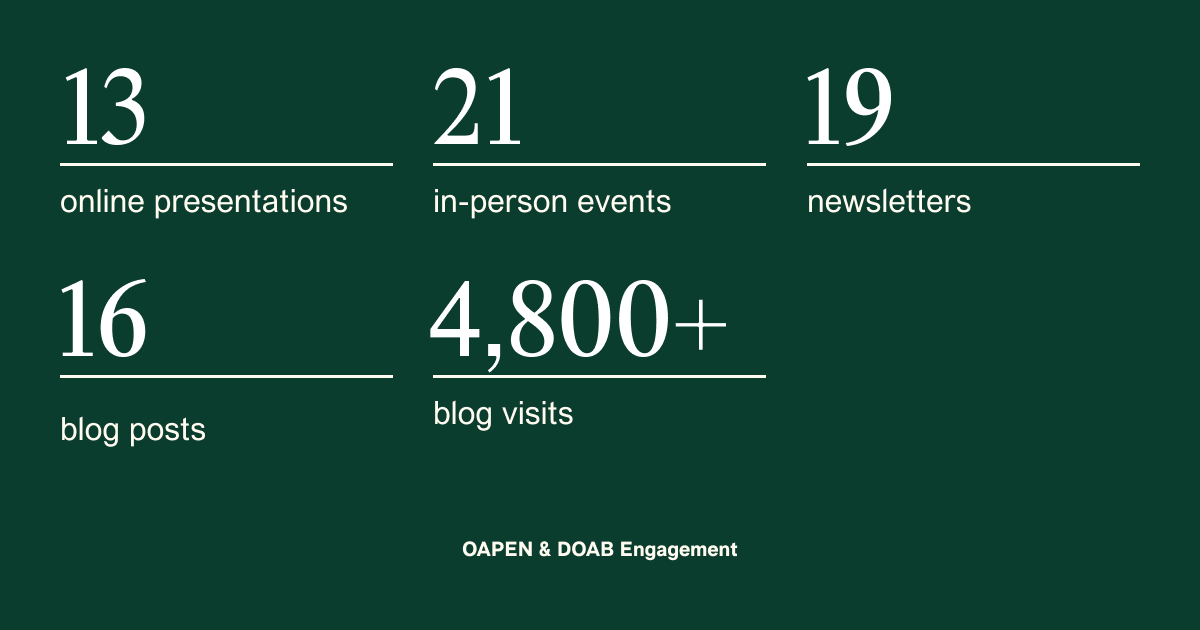
Image 4: A graphic showing different statistics relating to OAPEN and DOAB’s community engagement in 2025.
OA Books Special Interest Group
Throughout 2025, the OPERAS Open Access Books Special Interest Group (SIG) focused on strengthening coordination, knowledge exchange, and strategic engagement in OA book publishing. Key activities included preparation for successive Policy Forum meetings, integration of insights from surveys and workshops, and contributions to community-driven discussions on diamond OA for books.
A core priority was the development and refinement of a structured Policy Forum framework, connecting stakeholders, funders, and working groups to drive actionable outcomes. This included the creation of a policy matrix to align recommendations from PALOMERA with emerging funder priorities, enabling the SIG to target areas with the greatest potential impact.
The SIG is focused on facilitating task forces for the Policy Forum around three strategic themes: metadata alignment, monitoring of OA book policies, and cross-sectoral policy development. Goals include testing engagement approaches with diverse representation while maintaining flexibility in reporting and workflow. Outputs will include methodological guidance for task forces, frameworks for stakeholder input, and coordination with broader initiatives in the OA infrastructure ecosystem.
Members of the SIG also contributed to an article in Katina Magazine, ‘How Should Diamond Open Access Work for Books?’, which explores how applying operational criteria for diamond journals to books might work and other considerations.
The efforts of the SIG established a foundation for continued work in 2026, positioning it as a central node in shaping sustainable OA book policies, strengthening cross-institutional collaboration, and promoting actionable, community-led solutions.
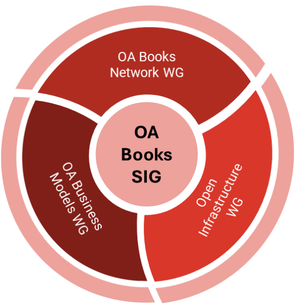
Image 5: The three working groups that make up the Open Access Books SIG.
OAPEN-EU
Open access to academic books is essential for promoting Open Science in the European Research Area. In May 2025, OAPEN was awarded two-year funding for OAPEN-EU (project number: 101250595), a project that aims to strengthen the OAPEN Library, which serves as a vital infrastructure for the curation, hosting, dissemination, and preservation of scholarly monographs, edited collections, and book chapters. Aligning with the EU’s OA policy requirements, the project seeks to enhance services tailored to the specific needs of Horizon Europe-funded publications and actively support the European Commission and the European Research Council’s OA mandates. During 2025, the European Collection was launched, which showcases books funded by the Commission and a self-deposit form was created to allow EU-funded researchers to deposit OA books into the OAPEN Library. The project will run until April 2027 and results will be made available in the OAPEN Zenodo community.

Image 6: ‘Funded by the European Union’.
OPERAS-NL
In October 2025, as part of the Netherlands Open Science Fair, the OAPEN Foundation and the KNAW Humanities Cluster launched OPERAS-NL, the Dutch National Node within the European OPERAS network. Coordinated by OAPEN and the KNAW Humanities Cluster, the node aims to increase the visibility of open scholarly communication in the social sciences and humanities (SSH) in the Netherlands.
In their press release, the KNAW Humanities Cluster said, ‘OPERAS-NL will serve as the connection point between the European OPERAS infrastructure and the Dutch SSH research landscape’.
OPERAS-NL is one of 13 National Nodes connecting European initiatives with local research communities and ensuring that national needs and perspectives are considered in international developments.
A new website was launched at the Fair, as well as a Zenodo Community for future outputs.
Image 7: The OPERAS NL logo.
The DOAB & OAPEN Ambassador Programme
The past year marked a pivotal moment for DOAB and OAPEN with the successful design and launch of the joint Ambassador Programme. Established to foster a globally diverse and equitable OA ecosystem for scholarly books, the programme crucially links our global mission and local communities worldwide.
The programme has clear, actionable objectives focused on driving local engagement to inform global strategy. Ambassadors serve as volunteer thought leaders, leveraging their regional expertise and professional networks to represent DOAB and OAPEN.
Ambassador tasks are divided into outreach activities (e.g., developing a comprehensive view of the scholarly book landscape, increasing awareness of OA books and DOAB in local languages, engaging academic communities) and project work (e.g., developing an annual plan and submitting ideas for locally developed projects with stakeholders).
The first cohort of ambassadors brings a wealth of diverse professional experience, spanning librarianship, publishing, and open science consultancy. Their regional and thematic focuses ensure broad coverage and deep local knowledge.
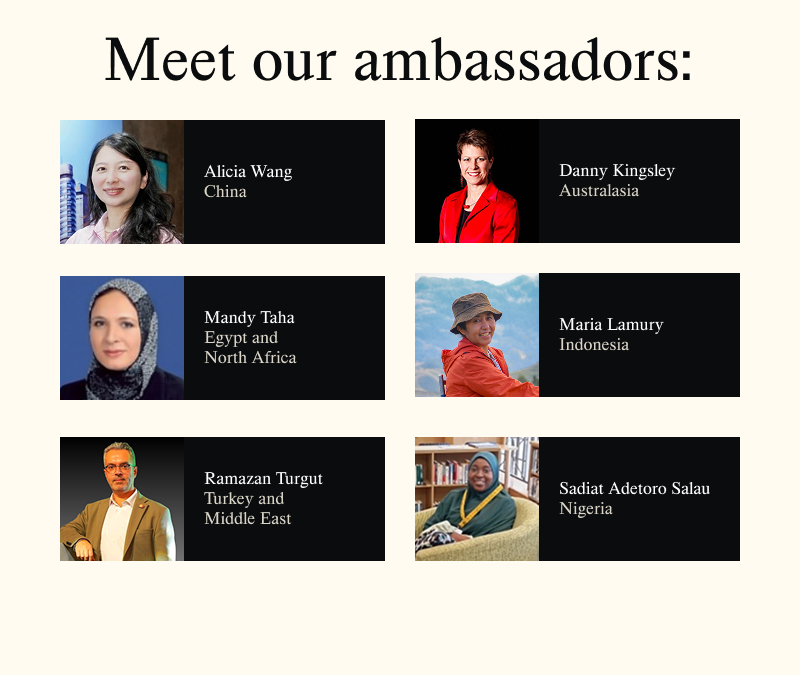
Image 8: All six ambassadors and their respective regions.
POSI Reassessment
At the end of 2025, we completed a reassessment for both OAPEN and DOAB against the revised Principles of Open Scholarly Infrastructure (POSI). POSI are a set of community-based principles that can guide open scholarly infrastructure organisations and initiatives that support the research community.
OAPEN and DOAB have participated in POSI since 2023, when we completed our first self-audits. Since then, POSI released version 2.0, introducing several changes and a few new principles, bringing the total to 20. Comparative results for 2023 and 2025 can be found on OAPEN and DOAB.
Directory of Open Access Books (DOAB)
While many of the updates above are applicable to both OAPEN and DOAB, there are some updates that apply solely to DOAB that we want to share below.
Updating publisher requirements
In March 2025, as DOAB continued to engage with a wide range of stakeholders across an increasingly diverse global community, and as the landscape continues to evolve, there was a clear need to revisit the workflows and standards that guided our own work. This also included the criteria and requirements for participating publishers, which help ensure that we can continue to uphold the rigorous academic standards of the scholarship we disseminate. With a growing number of applications from around the world, we strive to be more explicit and transparent in setting out these requirements, promoting best practices and better supporting publishers in preparing their applications.
DOAB’s revised and updated criteria and requirements for publishers are available on our website.
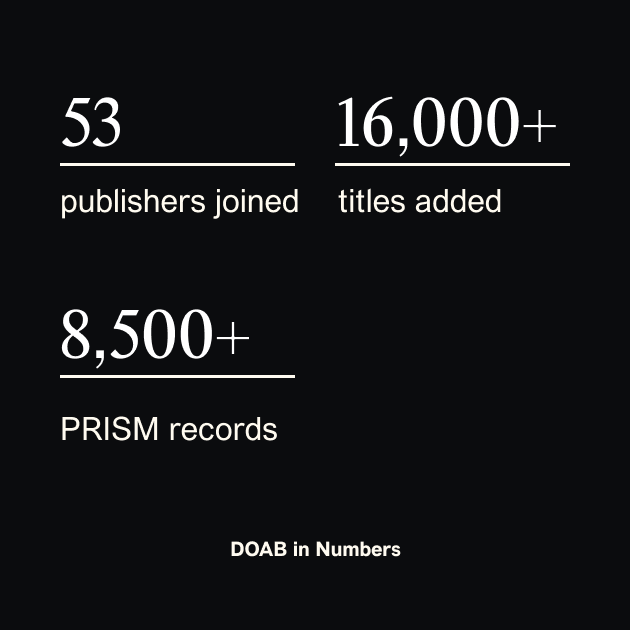
Image 9: DOAB in Numbers.
DOAB in the press
Alongside this, Niels Stern (Co-Director) and Jordy Findanis (Project Manager) contributed a two-part Guest Post series in The Scholarly Kitchen, ‘Trust and Transparency in Open Access Book Publishing’: Part 1 and Part 2. These posts highlight that while awareness of predatory journals has grown, untrustworthy OA book publishers pose similar risks, and researchers need tools like Think. Check. Submit. and reputable indexes (like DOAB) to identify credible outlets. DOAB continues to refine its criteria and work with a global network of trusted platforms and community feedback to enhance transparency, support diverse publishing practices, and uphold scholarly quality worldwide.
Copim Open Book Futures
2025 was a particularly busy year of collaboration for DOAB and OAPEN within the COPIM Open Book Futures project, funded by the Arcadia Foundation and the Research England Development Fund. We worked closely with partners from Thoth Open Metadata, the Open Book Collective, and Opening the Future to strengthen OA book infrastructures. While remaining agnostic about OA business models, we were actively involved in several events focused on diamond OA, including the Plato workshop in Bern, the AEUP Conference in Vienna, the German Library Congress in Bremen, and the OA Tage in Konstanz. Through exhibition booths and collaborative workshops, these engagements helped us build stronger networks in support of OA book publishing.
These activities also included participation in the Frankfurt Book Fair, a particularly significant venue for OAPEN, as it marked both the 15-year anniversary of the OAPEN Library and the place where it was originally launched in 2010. We greatly value these collaborations and look forward to continuing to work with these initiatives beyond the official conclusion of the Copim Open Book Futures project, at the end of April 2026.
Looking ahead
In 2026, the focus for DOAB will be on consolidating and expanding its partnerships, particularly through the Trusted Platform Network. We will further strengthen our commitment to quality assurance through promoting the PRISM service and its wider adoption. As with OAPEN, DOAB will introduce a new visual identity, which will be rolled out by the end of Q1. We also plan to update the delivery of DOAB’s metadata feeds, which have always been freely available for anyone to access and download in multiple formats from our website, aiming to enhance their reliability and usability.
‘Positioning DOAB as a trusted, global open knowledge infrastructure is the goal of the initiatives started in 2025 and continuing into 2026. With key developments such as more rigorous publisher requirements, PRISM, the ambassador programme, the Trusted Platform Network, and a modernised website and metadata feed, DOAB is now better equipped to play a central role in supporting open access books in an increasingly complex and demanding information landscape.’

Image 10: Pierre Mounier, DOAB Co-Director.
Finances
Information on OAPEN and DOAB finances will be made available soon.
Jump back to Director’s message | Kickstarting our strategic plans | Key developments | Global engagement | Directory of Open Access Books (DOAB) | Finances